Get
in touch
in touch
Tell us where you're headed, and
we'll help with the rest:
destination advice, trip preparation,
and everything in between.


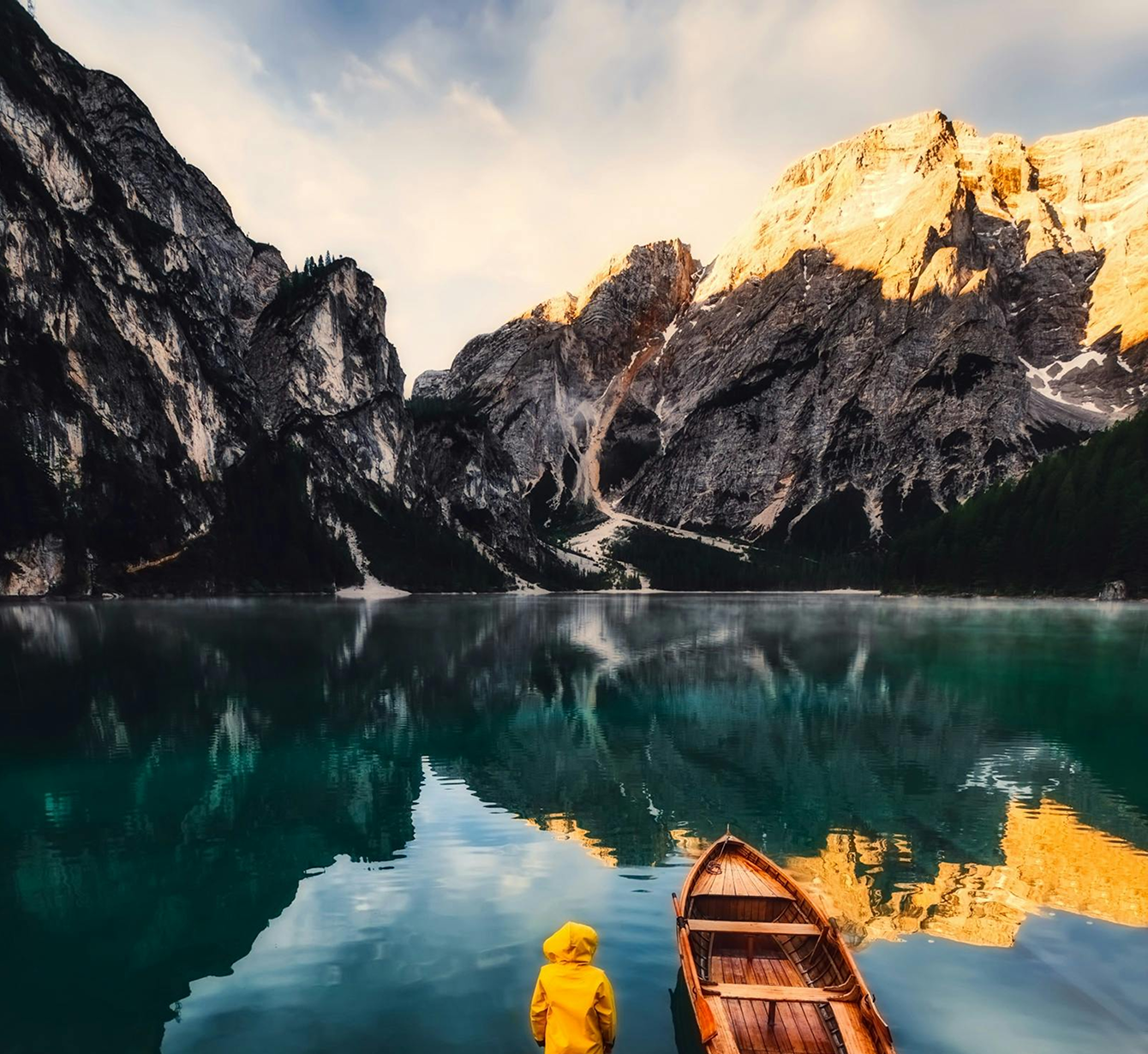
Iceland is not a destination you check off a list. It's a place that works its way into you slowly, then all at once. You arrive expecting waterfalls and volcanoes, and you get them, but you leave thinking about the light, the silence, and the strange feeling that you've been somewhere that doesn't quite belong to this world.
This is a love letter to that feeling.
Nothing prepares you for the moment you step off the plane at Keflavík. The ground is dark and uneven, stretched flat in every direction. There are no trees. The wind hits you immediately: sharp, constant, indifferent. It feels less like arriving in a country and more like landing on a young planet still figuring out its final form.
Iceland sits on the Mid-Atlantic Ridge, where two tectonic plates slowly pull apart. That geological restlessness is visible everywhere. Steam rises from the ground in random places. The earth is warm beneath your feet. In some spots, you can smell sulfur on the air, a reminder that beneath the surface, things are very much alive.
The drive from the airport into Reykjavík takes about forty-five minutes, and it sets the tone. Moss-covered lava fields stretch out like something from a dream. Distant mountains sit low against the sky. The colors are muted (greys, greens, blacks), but somehow they feel richer than anything more vivid.
Reykjavík is not a capital city in the traditional sense. It's compact, walkable, and quietly confident. The houses are painted in bright colors (reds, blues, yellows) as if to compensate for the long dark winters. Street art covers walls. Coffee shops are taken seriously. People are friendly but not intrusive.
Hallgrímskirkja church stands at the center, its concrete facade designed to mimic the basalt columns you'll see along the coast. From the top, you can see the whole city, the bay, and the mountains beyond. It's a good place to get your bearings, and to understand how small this place really is. Two-thirds of Iceland's population lives in the capital region. The rest of the country is, for the most part, empty.
That emptiness is the point.
Most visitors start with the Golden Circle, a 300-kilometer loop that takes in three of Iceland's most iconic sites. Þingvellir National Park, where the tectonic plates meet and where Iceland's ancient parliament once gathered. Geysir, the original hot spring that gave every other geyser its name. And Gullfoss, a waterfall that thunders into a canyon with a force that feels almost personal.
Yes, they're crowded. Yes, you'll share them with tour buses. But they're famous for a reason. Standing at Gullfoss, feeling the spray on your face, watching the water disappear into mist, it's a moment that stays with you. The scale is difficult to process. You take photos, but they never quite capture it. Some things are meant to be felt, not photographed.
Iceland has thousands of waterfalls. Some are famous: Seljalandsfoss, where you can walk behind the falling water; Skógafoss, with its perfect rainbow in the mist. Others are unnamed, visible from the road for a few seconds before disappearing behind a hill. Each one has its own character, its own sound, its own way of catching the light.
Along the south coast, the landscape shifts constantly. Green farms give way to black sand beaches. The beach at Reynisfjara is a study in contrast: dark volcanic sand, white foaming waves, and basalt sea stacks rising from the water like something out of myth. The waves here are dangerous, and signs warn visitors to stay back. It's a reminder that Iceland's beauty comes with teeth.
Nearby, the glacier Sólheimajökull creeps down from the highlands, its surface cracked and grey with ash. Walking on it with crampons, you feel the cold rising through your boots and hear the ice shifting beneath you. Guides tell you it's retreating faster every year. Climate change isn't abstract here. It's visible, measurable, happening in real time.
For all its drama, what stays with you about Iceland are the quiet moments. A soak in a hot spring while snow falls around you. The northern lights rippling across the sky in shades of green and purple, so silent and strange they seem unreal. A long drive through the Westfjords, where the roads wind along cliffs and the only other cars are sheep.
These are the moments you don't plan for. They arrive unexpectedly: a break in the clouds, a sudden rainbow, a seal popping its head above the water. Iceland rewards those who slow down and pay attention. It asks you to be present, to look, to listen. In return, it gives you things you didn't know you needed.
The Ring Road (Route 1) circles the entire country, covering about 1,300 kilometers. Most travelers attempt it in a week or two, rushing from one highlight to the next. But Iceland is not a place to rush. The best experiences often happen off the main road: a detour to a remote hot spring, a hike into a valley no one else is visiting, a night in a small guesthouse where the owner tells stories about trolls and hidden folk.
The Westfjords are remote and raw, with sea cliffs alive with puffins and roads that feel like they're leading nowhere. The East Fjords are quieter, with small fishing villages and reindeer that roam the hills. The North, around Akureyri, offers whale watching and geothermal baths with views over the water. Each region has its own personality, its own rhythm.
Iceland has a way of stripping things down. The weather forces you to be flexible. The landscape reminds you how small you are. The silence gives you space to think. It's not a comfortable place. The wind never stops, the rain comes sideways, and the sun sometimes doesn't rise until noon. But that discomfort is part of what makes it memorable.
You come home with more than photos. You come home with a different sense of scale, a different relationship with weather, a different understanding of what it means to be alone in a landscape that doesn't need you. Iceland doesn't care whether you're there or not. And somehow, that's what makes it so special.
If you're planning to go, here are a few things worth knowing. Rent a car. Public transport outside Reykjavík is limited, and the freedom to stop whenever you want is worth the cost. Bring layers, waterproof everything, and shoes you don't mind getting muddy. Book accommodation early, especially in summer. Respect the land. Don't walk on moss, don't approach glaciers without a guide, and always check the weather before heading out.
And most importantly: don't try to see everything. Iceland will still be there. Let it unfold at its own pace. Let yourself get lost, just a little. The best moments are the ones you didn't plan for.
This is a love letter, so it should end the way love letters do: with gratitude. Thank you, Iceland, for the wind that never stopped. For the light that lingered. For the waterfalls that roared and the hot springs that soothed. For the silence that taught me to listen.
I'll be back. I think everyone who visits says that. And I think everyone means it.
What happens when civilization disappears behind you? This post explores remote landscapes, the lessons they teach, and the courage and connection that only untouched nature can inspire.
What waits beyond the marked trail? This post explores how leaving familiar routes behind leads to unexpected discoveries, deeper awareness, and adventures no guidebook can offer.
Every trail holds a story worth telling. This collection follows paths around the world, revealing how wrong turns, chance encounters, and quiet moments transform a simple hike into something unforgettable.