Get
in touch
in touch
Tell us where you're headed, and
we'll help with the rest:
destination advice, trip preparation,
and everything in between.


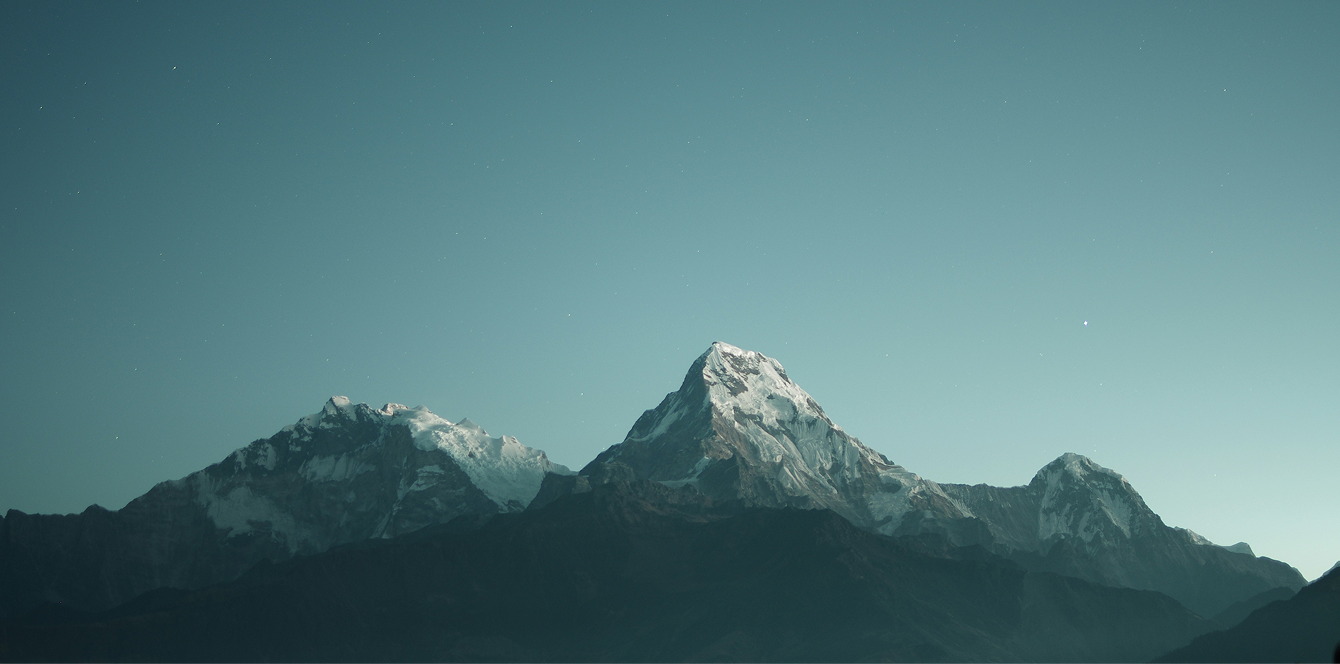
There is a moment that happens when you leave the marked trail behind. The signpost fades from view. The voices of other hikers grow distant. The path beneath your feet becomes less certain, more forgiving of mistakes, more demanding of attention. And somewhere in that transition, something shifts inside you. The world becomes larger and smaller at the same time. You are alone with your thoughts, your steps, and the quiet hum of the unknown.
This is what it means to go beyond the path.
Let's be honest about something first. Most of us stay on the trail for good reason. Trails are safe. They're tested. They lead somewhere worth going, and they bring us back without too much trouble. Guidebooks recommend them. Friends have walked them. Reviews confirm they're worth the effort.
There's nothing wrong with this. Popular trails exist because they offer something genuine: access to beauty, challenge, and connection. The Inca Trail, the Tour du Mont Blanc, the Appalachian Trail. These routes have earned their reputation. They deliver.
But there's a cost to always following the crowd. When everyone walks the same path, everyone sees the same things. The views become familiar before you even arrive. The experience is shared, which can be beautiful, but it can also feel less like discovery and more like confirmation. You see what you were told you'd see. You feel what you expected to feel.
The trail becomes a script. And scripts, however well written, leave little room for surprise.
Going beyond the path doesn't mean abandoning safety or ignoring good judgment. It means opening yourself to routes that aren't in the guidebook. It means choosing curiosity over certainty, at least some of the time. It means accepting that the best moments often happen when you're not entirely sure where you're going.
Consider the difference between a marked trail and a faint path. The marked trail tells you where to go. The faint path asks you to figure it out. One offers direction. The other offers agency. Both have value, but they cultivate different parts of us.
When you venture beyond the familiar, you engage senses that often go quiet on well-trodden routes. You notice the ground more carefully. You listen for water, for wind, for the sound of something moving nearby. You read the landscape like a text, looking for clues. Your attention sharpens. Your awareness expands.
This is not just about hiking. It applies to travel more broadly. The neighborhood without a TripAdvisor ranking. The restaurant with no English menu. The town where no one speaks your language. These places ask more of you, and in asking more, they give more.
Every region has its hidden corners. Places that don't appear on postcards. Places that locals keep to themselves, not out of selfishness, but because they understand something outsiders often forget: not everything needs to be shared.
In Iceland, beyond the Golden Circle, there are valleys where no tour buses go. Hot springs hidden in lava fields, accessible only by a long walk across uneven ground. In Japan, beyond Kyoto's famous temples, there are mountain villages where traditions continue uninterrupted by tourism. In Peru, beyond Machu Picchu, there are ruins that receive a handful of visitors each week, if that.
These places don't advertise themselves. They don't need to. They exist quietly, waiting for those willing to look beyond the obvious. Finding them requires effort, research, sometimes luck. But the reward is a sense of discovery that no curated experience can replicate.
The hidden corners of the world are not always dramatic. Sometimes they're small. A bench overlooking a valley no one talks about. A trail that leads to a waterfall with no name. A stretch of coastline where you're the only person for miles. These moments don't make headlines. They make memories.
Getting lost has a bad reputation. We treat it as failure, as wasted time, as something to avoid. But getting lost, when managed safely, can be one of the most valuable experiences travel offers.
When you're lost, you pay attention. You notice landmarks. You remember turns. You develop a relationship with the landscape that doesn't happen when you're following arrows. You also learn about yourself. How do you respond to uncertainty? Do you panic? Do you slow down? Do you ask for help? Do you trust your instincts?
These questions matter. They reveal something about who you are, something that comfortable routes tend to hide. The trail is predictable. The off-trail is not. And in that unpredictability, you meet parts of yourself you might not otherwise encounter.
There's also a practical dimension. Getting lost teaches navigation. It builds confidence. It shows you that you can handle more than you thought. The first time you find your way back after taking a wrong turn, something changes. You trust yourself more. You worry less. You become, in small ways, more capable.
Going beyond the path comes with responsibility. The places we discover are not ours to exploit. They belong to the people who live there, the ecosystems that sustain them, the cultures that shaped them.
This means traveling with care. Respecting local customs. Asking permission when appropriate. Leaving no trace. Supporting local economies rather than extracting from them. Understanding that discovery is a privilege, not a right.
It also means being honest about our motivations. Are we exploring to connect, or to collect? To learn, or to boast? To give, or to take? These questions don't always have clean answers, but asking them matters. The difference between exploration and exploitation often comes down to intention.
The best travelers understand this. They move through the world with humility, aware that they are guests. They seek understanding rather than novelty. They leave places better than they found them, or at least no worse. They recognize that the hidden corners of the world are not hidden for our benefit. They are hidden because that's how they survive.
You don't need to go to Patagonia or Iceland to go beyond the path. The principle applies anywhere. The trail behind your house. The city you've lived in for years. The region you think you know.
There are always unexplored corners. Always routes you haven't taken. Always places that don't appear on the maps you've been using. The question is whether you're willing to look for them.
Start small. Take a different route home. Walk down a street you've never noticed. Say yes to an invitation you'd normally decline. These small acts of deviation train the muscle of curiosity. They remind you that the familiar is not the same as the known.
Over time, these small choices add up. You develop a habit of looking beyond. You become the kind of person who notices the unmarked path, the unnamed trail, the place that doesn't appear in any guidebook. And once you develop that habit, the world opens up in ways you didn't expect.
Adventure is not about danger. It's about uncertainty. It's about stepping into situations where the outcome is not guaranteed, where you have to rely on yourself and the kindness of strangers, where the script runs out and you have to improvise.
This is what the marked trail cannot offer. The marked trail is safe. It's predictable. It's been walked before. There's comfort in that, and comfort has its place. But adventure lives elsewhere. It lives in the spaces between the signs, in the moments when you're not sure what comes next.
When you go beyond the path, you invite uncertainty into your life. You accept that things might not go as planned. You open yourself to the possibility of surprise. And in doing so, you open yourself to something else: the feeling of being alive in a way that comfortable routines rarely provide.
Eventually, you return. To the marked trail. To the familiar route. To the life you left behind. But you return different. The path beyond the path has changed you, even if you can't articulate how.
You notice things you didn't notice before. You appreciate the small details. You carry with you the memory of that hidden waterfall, that unmarked valley, that moment when you realized you were completely alone and completely at peace.
And you carry something else: the knowledge that the world is larger than you thought. That there are places you haven't been. That the map is not the territory. That adventure is not a destination but a way of moving through the world.
So go beyond the path. Not always. Not recklessly. But often enough to remember what it feels like to be uncertain, to be curious, to be alive. The hidden corners of the world are waiting. They've been waiting all along.
Why does Iceland stay with people long after they leave? This post explores the landscapes, silences, and small moments that make the island impossible to forget.
What happens when civilization disappears behind you? This post explores remote landscapes, the lessons they teach, and the courage and connection that only untouched nature can inspire.
Every trail holds a story worth telling. This collection follows paths around the world, revealing how wrong turns, chance encounters, and quiet moments transform a simple hike into something unforgettable.